Blog
Blog
 January 23, 2026
DreamFactory is a secure, self-hosted enterprise data access platform that provides governed API access to any data source, connecting enterprise applications and on-prem LLMs with role-based access and identity passthrough.
During the last 10 years, microservices-based applications have benefited global enterprises by providing them with massive scalability, greater agility, more highly available systems, and improved operational efficiency.
A recent DZone study points out that “nearly two-thirds of the organizations surveyed (63%) are building some (18%) or all (46%) of their applications using microservices.” In this article, we'll identify what our most popular microservices articles have been, providing you the direction you need on finding out all there is to know on the growing topic of microservices.

What are Microservices?
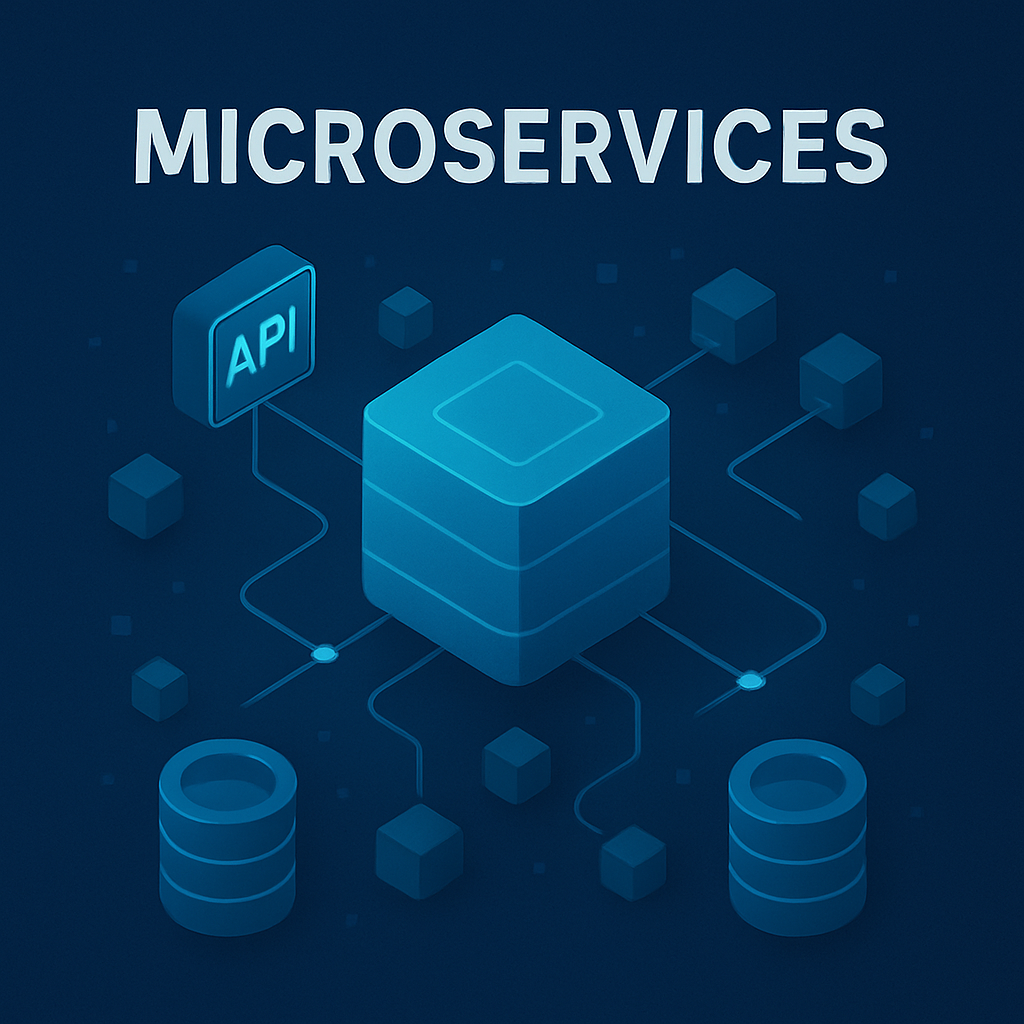
Microservices is an architectural style where an application is built from small, independently deployable services that each do one thing well. These services communicate over lightweight APIs (often REST or events), allowing teams to build, deploy, and scale parts of the system without touching the whole. The trade-off: you gain agility and resilience, but you must manage more services, APIs, and observability.
Our 5 Most-Read Microservices Articles
#5 - 7 Key Benefits of Microservices
Knowing the concrete benefits helps you justify architecture choices and prioritize where microservices will deliver the most impact.
In this article we asked the question, why are microservices so helpful to modern enterprises? Similarly, what benefits do corporations receive from using this architectural style? Read the full article here: 7 Key Benefits of Microservices
#4 - Building Microservices Applications With an API Gateway: Advantages and Strategies
A gateway centralizes authentication, request routing, and observability so teams can ship services faster without exposing internal topology.
In this article, we defined what API gateways are, how they work, their benefits, and outline some strategies for developing and building an API gateway of your own. Read the full article here:
Building Microservices Applications With an API Gateway: Advantages and Strategies
#3 - Microservices vs Web Services
Understand when to use microservices for independently deployable domains versus web services for interoperable interfaces within a modular design.
Microservices are one of the most popular concepts in application development right now and are getting a lot more attention than web services. Both concepts, however, are highly relevant when building a modular, services-oriented application architecture – so it’s important to understand how both fit into the picture of modern app design. Read the full article here:
#2 - 4 Microservices Examples: Amazon, Netflix, Uber, and Etsy
Borrow proven patterns—from deployments to resilience—used by leaders to de-risk your own microservices journey.
Some of the most innovative and profitable microservices examples amongst enterprises companies in the world – like Amazon, Netflix, Uber, and Etsy – attribute their IT initiatives’ enormous success in part to the adoption of popular microservices. Find out why here:
4 Microservices Examples: Amazon, Netflix, Uber, and Etsy
#1 - REST APIs vs Microservices: The Differences and How They Work Together
REST defines how services communicate, while microservices define how you structure and deploy them—both are essential for scalable systems.
The terms RESTful API and Microservices go hand-in-hand when building a microservices-based application. Nevertheless, they refer to very different things. In this article, we'll discuss these differences but also how they work together to get the most effectiveness out of your enterprise applications. Read the full article here:
REST APIs vs Microservices: The Differences and How They Work Together

How DreamFactory Accelerates Microservices Delivery
With DreamFactory’s ability to establish and manage integrations between different microservices almost instantly, we have removed the most significant barriers, challenges, and delays associated with microservices app development.
- Secure REST APIs for databases and services — Instantly expose MySQL, Postgres, SQL Server, NoSQL, and external services as secure REST endpoints with pagination, filtering, and docs out of the box.
- Secure with keys, roles, and rate limiting — Apply API keys, JWT/OAuth, RBAC, CORS, and per-role throttles to protect services without custom middleware.
- Orchestrate integrations without hand-coding glue — Chain endpoints, transform payloads, and add server-side scripts/webhooks to coordinate microservices and data workflows.
Key Takeaways
Benefits — Microservices boost team agility, independent scaling, and resilience when paired with strong API practices.
Patterns — Use an API gateway for auth/routing/observability, model services around domains, and standardize contracts (REST/events).
Next step — Try DreamFactory’s hosted trial or book a short demo to connect your services faster.
FAQs
1. Are microservices the same as REST APIs?
DreamFactory is a secure, self-hosted enterprise data access platform that provides governed API access to any data source, connecting enterprise applications and on-prem LLMs with role-based access and identity passthrough. For microservices architectures, this means you can instantly create secure REST APIs for each service's data sources without writing custom code, while maintaining consistent authentication, rate limiting, and access controls across all services.
2. When should I use an API gateway with microservices?
When you need unified routing, auth, rate limiting, and observability—especially for client teams that shouldn’t know internal service topology.
3. What’s the biggest benefit teams see first?
Faster independent deployments—smaller blast radius and the ability to scale hotspots without scaling the whole app.
4. How does DreamFactory fit a microservices stack?
It provides secure REST APIs for data/services, adds auth and rate limits, and lets you orchestrate integrations—reducing custom glue code.
5. Can I start hybrid (a few services + a monolith)?
Yes. Many teams carve out high-change or high-scale domains first, exposing them behind an API gateway, then iteratively decompose.