---
title: Latency vs. Throughput in Distributed Rate Limiting
description: Understanding the balance between latency and throughput is essential for optimizing distributed rate limiting systems effectively.
image: https://assets.seobotai.com/cdn-cgi/image/quality=75,w=1536,h=1024/dreamfactory.com/681ab4687a153cb8e4518036-1746591214693.jpg
---
[](https://www.dreamfactory.com/)
Products & Services
[AI Data Gateway](https://www.dreamfactory.com/ai-data-gateway/overview)
[Overview Why DreamFactory exists](https://www.dreamfactory.com/ai-data-gateway/overview) [Data Gov, Comp, Security Policy enforcement at the API layer](https://www.dreamfactory.com/ai-data-gateway/ai-data-governance) [Standard API Layer One contract for every backend](https://www.dreamfactory.com/ai-data-gateway/standard-api-layer) [API Gateway Functionality Routing, auth, rate limits, observability](https://www.dreamfactory.com/ai-data-gateway/api-gateway-functionality) [Deployment & Integration Self-hosted, cloud, hybrid](https://www.dreamfactory.com/ai-data-gateway/on-premise-deployment-and-integration) [Developer Productivity Auto-generated, never hand-coded](https://www.dreamfactory.com/ai-data-gateway/ai-development-accelerated) [AI App Architectures Patterns for RAG, agents, MCP](https://www.dreamfactory.com/ai-data-gateway/enterprise-ai-architectures)
AI Data Models
[AIOpenAI](https://www.dreamfactory.com/use-cases/openai) [GGoogle Gemini](https://www.dreamfactory.com/use-cases/google-gemini) [CAnthropic Claude](https://www.dreamfactory.com/use-cases/anthropic-claude-landing) [LMeta Llama](https://www.dreamfactory.com/use-cases/meta-llama) [MMistral AI](https://www.dreamfactory.com/use-cases/mistral) [CoCohere](https://www.dreamfactory.com/use-cases/cohere)
Services and support
[Quickstart Service Packages Expert-led Quickstarts to production](https://www.dreamfactory.com/services-and-support/quickstart-services-packages)
API Management
[Generate & Manage REST APIs From any database, in seconds](https://www.dreamfactory.com/api-management/generate-rest-apis) [Features Security, scripting, self-hosted & more](https://www.dreamfactory.com/api-management/features) [API Generation The complete guide to auto-generated APIs](https://blog.dreamfactory.com/a-complete-guide-to-api-generation) [API Management Concepts, tools, and best practises](https://blog.dreamfactory.com/what-is-api-management-a-brief-overview-of-api-management-concepts-and-tools?_gl=1*jl0njh*_gcl_au*MjQzMjgwMTc3LjE3ODIzMjI3MzY)
Use Cases
AI Use Cases
[AI Data Access Secure, governed reads for your LLMs](https://www.dreamfactory.com/use-cases/ai-data-access) [MCP Server Drop-in Model Context Protocol](https://www.dreamfactory.com/use-cases/mcp-server) [Legacy Modernization Wrap mainframes with REST](https://www.dreamfactory.com/use-cases/legacy-modernization) [Data Governance Audit every call, enforce every policy](https://www.dreamfactory.com/use-cases/data-governance)
[Customer Case Studies](https://www.dreamfactory.com/case-studies)
[Energy Modernization](https://www.dreamfactory.com/case-studies/energy-snowflake-modernization) [Government Modernization](https://www.dreamfactory.com/case-studies/government-mainframe-oracle-modernization) [Government Business Intelligence](https://www.dreamfactory.com/case-studies/government-sql-server-bi-analyst-queries) [Manufacturing Modernization](https://www.dreamfactory.com/case-studies/steel-manufacturing-sap-erp-modernization) [Financial Services Investor Portal](https://www.dreamfactory.com/case-studies/financial-services-sql-server-investor-portal) [Non-Profit Partner Data Sharing](https://www.dreamfactory.com/case-studies/non-profit-sql-server-partner-data-sharing) [Professional Services Exec Dashboards](https://www.dreamfactory.com/case-studies/professional-services-erp-dashboards) [Education HR and External Data Sharing](https://www.dreamfactory.com/case-studies/education-student-hr-sql-server-mysql-external-data-sharing)
Industries
Industries
#### [Healthcare HIPAA-grade APIs across EHR, claims, and labs.](https://www.dreamfactory.com/use-cases/healthcare)
#### [Financial Services Portfolios, partners, and portals on one layer.](https://www.dreamfactory.com/use-cases/financial-services)
#### [Government Modernize mainframes without re-platforming.](https://www.dreamfactory.com/use-cases/government)
#### [Manufacturing SAP, MES, and shop-floor data, governed.](https://www.dreamfactory.com/use-cases/manufacturing)
#### [Spotlight How enterprises run on DreamFactory From healthcare to energy to finance — governance baked into every endpoint. Browse case studies →](https://www.dreamfactory.com/case-studies)
Connectors
SQL Database
[SQL SQL Server](https://www.dreamfactory.com/connectors/sql-server) [OR Oracle](https://www.dreamfactory.com/connectors/oracle) [PG PostgreSQL](https://www.dreamfactory.com/connectors/postgresql) [My MySQL](https://www.dreamfactory.com/connectors/mysql)
NoSQL & Docs
[Dy DynamoDB](https://www.dreamfactory.com/connectors/dynamodb) [Do DocumentDB](https://www.dreamfactory.com/connectors/azure-documentdb) [Mo MongoDB](https://www.dreamfactory.com/connectors/mongodb) [Cb CouchDB](https://www.dreamfactory.com/connectors/couch-db)
Cloud Warehouses
[S3 S3](https://www.dreamfactory.com/connectors/amazon-s3) [Ab Azureblob](https://www.dreamfactory.com/connectors/azure-blob) [FS FTP/SFTP](https://www.dreamfactory.com/connectors/ftp-sftp) [LS Local Storage](https://www.dreamfactory.com/connectors/local-storage)
C & SaaS
[Sf Salesforce](https://www.dreamfactory.com/connectors/salesforce) [API REST / SOAP](https://www.dreamfactory.com/connectors/soap-to-rest)
[See all 30+ connectors](https://www.dreamfactory.com/connectors)
[Blog](https://blog.dreamfactory.com/)
[FREE 30 Minute Demo](https://www.dreamfactory.com/demo)
[](https://www.dreamfactory.com/)
 
Back to main menu
Products & Services
Use Cases
Industries
Connectors
[Blog](https://blog.dreamfactory.com/)
[FREE 30 Minute Demo](https://www.dreamfactory.com/demo)
[AI Data Gateway](https://www.dreamfactory.com/ai-data-gateway/overview)
[Overview Why DreamFactory exists](https://www.dreamfactory.com/ai-data-gateway/overview) [Data Gov, Comp, Security Policy enforcement at the API layer](https://www.dreamfactory.com/ai-data-gateway/ai-data-governance) [Standard API Layer One contract for every backend](https://www.dreamfactory.com/ai-data-gateway/standard-api-layer) [API Gateway Functionality Routing, auth, rate limits, observability](https://www.dreamfactory.com/ai-data-gateway/api-gateway-functionality) [Deployment & Integration Self-hosted, cloud, hybrid](https://www.dreamfactory.com/ai-data-gateway/on-premise-deployment-and-integration) [Developer Productivity Auto-generated, never hand-coded](https://www.dreamfactory.com/ai-data-gateway/ai-development-accelerated) [AI App Architectures Patterns for RAG, agents, MCP](https://www.dreamfactory.com/ai-data-gateway/enterprise-ai-architectures)
AI Data Models
[AIOpenAI](https://www.dreamfactory.com/use-cases/openai) [GGoogle Gemini](https://www.dreamfactory.com/use-cases/google-gemini) [CAnthropic Claude](https://www.dreamfactory.com/use-cases/anthropic-claude-landing) [LMeta Llama](https://www.dreamfactory.com/use-cases/meta-llama) [MMistral AI](https://www.dreamfactory.com/use-cases/mistral) [CoCohere](https://www.dreamfactory.com/use-cases/cohere)
Services and support
[Quickstart Service Packages Expert-led Quickstarts to production](https://www.dreamfactory.com/services-and-support/quickstart-services-packages)
AI Data Models
[Generate & Manage REST APIs From any database, in seconds](https://www.dreamfactory.com/api-management/generate-rest-apis) [Features Security, scripting, self-hosted & more](https://www.dreamfactory.com/api-management/features) [API Generation The complete guide to auto-generated APIs](https://blog.dreamfactory.com/a-complete-guide-to-api-generation) [API Management Concepts, tools, and best practises](https://blog.dreamfactory.com/what-is-api-management-a-brief-overview-of-api-management-concepts-and-tools?_gl=1*jl0njh*_gcl_au*MjQzMjgwMTc3LjE3ODIzMjI3MzY)
AI Use Cases
[AI Data Access Secure, governed reads for your LLMs](https://www.dreamfactory.com/use-cases/ai-data-access) [MCP Server Drop-in Model Context Protocol](https://www.dreamfactory.com/use-cases/mcp-server) [Legacy Modernization Wrap mainframes with REST](https://www.dreamfactory.com/use-cases/legacy-modernization) [Data Governance Audit every call, enforce every policy](https://www.dreamfactory.com/use-cases/data-governance)
[Customer Case Studies](https://www.dreamfactory.com/case-studies)
[Energy Modernization](https://www.dreamfactory.com/case-studies/energy-snowflake-modernization) [Government Modernization](https://www.dreamfactory.com/case-studies/government-mainframe-oracle-modernization) [Government Business Intelligence](https://www.dreamfactory.com/case-studies/government-sql-server-bi-analyst-queries) [Manufacturing Modernization](https://www.dreamfactory.com/case-studies/steel-manufacturing-sap-erp-modernization) [Financial Services Investor Portal](https://www.dreamfactory.com/case-studies/financial-services-sql-server-investor-portal) [Non-Profit Partner Data Sharing](https://www.dreamfactory.com/case-studies/non-profit-sql-server-partner-data-sharing) [Professional Services Exec Dashboards](https://www.dreamfactory.com/case-studies/professional-services-erp-dashboards) [Education HR and External Data Sharing](https://www.dreamfactory.com/case-studies/education-student-hr-sql-server-mysql-external-data-sharing)
Industries
#### [Healthcare HIPAA-grade APIs across EHR, claims, and labs.](https://www.dreamfactory.com/use-cases/healthcare)
#### [Financial Services Portfolios, partners, and portals on one layer.](https://www.dreamfactory.com/use-cases/financial-services)
#### [Government Modernize mainframes without re-platforming.](https://www.dreamfactory.com/use-cases/government)
#### [Manufacturing SAP, MES, and shop-floor data, governed.](https://www.dreamfactory.com/use-cases/manufacturing)
SQL Database
[SQL SQL Server](https://www.dreamfactory.com/connectors/sql-server) [OR Oracle](https://www.dreamfactory.com/connectors/oracle) [PG PostgreSQL](https://www.dreamfactory.com/connectors/postgresql) [My MySQL](https://www.dreamfactory.com/connectors/mysql)
NoSQL & Docs
[Dy DynamoDB](https://www.dreamfactory.com/connectors/dynamodb) [Do DocumentDB](https://www.dreamfactory.com/connectors/azure-documentdb) [Mo MongoDB](https://www.dreamfactory.com/connectors/mongodb) [Cb CouchDB](https://www.dreamfactory.com/connectors/couch-db)
Cloud Warehouses
[S3 S3](https://www.dreamfactory.com/connectors/amazon-s3) [Ab Azureblob](https://www.dreamfactory.com/connectors/azure-blob) [FS FTP/SFTP](https://www.dreamfactory.com/connectors/ftp-sftp) [LS Local Storage](https://www.dreamfactory.com/connectors/local-storage)
C & SaaS
[Sf Salesforce](https://www.dreamfactory.com/connectors/salesforce) [API REST / SOAP](https://www.dreamfactory.com/connectors/soap-to-rest)
[See all 30+ connectors](https://www.dreamfactory.com/connectors)
[ Blog](https://blog.dreamfactory.com/)
# Latency vs. Throughput in Distributed Rate Limiting
by Kevin Hood
 May 6, 2025
Table of contents
RECOMMENDED ARTICLES
- [A Complete Guide to API Generation](https://blog.dreamfactory.com/a-complete-guide-to-api-generation)
- [10 Best API Management Tools](https://blog.dreamfactory.com/what-is-api-management-a-brief-overview-of-api-management-concepts-and-tools)
- [Creating a Microsoft SQL Server API in Less Than 5 minutes with DreamFactory](https://blog.dreamfactory.com/creating-a-microsoft-sql-server-api-in-less-than-5-minutes-with-dreamfactory)
- [Hasura vs. DreamFactory: A Comprehensive Comparison](https://blog.dreamfactory.com/hasura-vs-dreamfactory)
- [Build A Snowflake REST API in Less Than 5 Minutes](https://blog.dreamfactory.com/generate-a-snowflake-rest-api-in-less-than-5-minutes)
**Balancing latency and throughput is critical for managing distributed rate limiting systems effectively.** Here's what you need to know:
- **Latency** measures how quickly a request is processed and responded to.
- **Throughput** tracks how many requests a system can handle over time.
- These two metrics often conflict: optimizing for one can negatively impact the other.
### Key Takeaways:
1. **Challenges in Reducing Latency**:
- Synchronizing distributed nodes adds network overhead and delays.
- Improving token precision increases computational demands.
- Physical limits like hardware specs and infrastructure location play a role.
2. **Boosting Throughput**:
- Manage traffic spikes with buffers, fallback mechanisms, and recovery protocols.
- Use request batching to process multiple requests efficiently.
- Distribute traffic across nodes with load balancing and geographic optimization.
3. **Optimizing Both**:
- Use performance models like queue theory and load testing to analyze trade-offs.
- Monitor metrics like request latency (<100ms) and resource utilization (60-80%).
- Employ hybrid solutions (e.g., local caching + distributed synchronization) for balance.
### Quick Comparison:
| Metric | Focus Area | Impact on System |
| --- | --- | --- |
| **Latency** | Response time per request | User experience |
| **Throughput** | Total requests handled over time | System capacity |
To achieve the best performance, continuously monitor and adjust your system based on real-world traffic patterns.
## The subtle art of API Rate Limiting
## Latency Reduction Obstacles
This section dives into the main challenges that distributed rate limiting systems face when it comes to reducing latency.
### Node Synchronization Costs
Coordinating rate limiting across multiple distributed nodes introduces several hurdles. Each node must stay in sync with others to maintain accurate token counts and usage data. Key issues include:
- **State Consistency**: Nodes need to exchange information frequently to ensure token counts remain accurate.
- **Clock Synchronization**: Misaligned clocks between nodes can lead to token allocation errors.
- **Network Overhead**: Communication between nodes - especially when spread across different regions - adds latency.
These factors make synchronization a significant contributor to latency.
### Token Precision Requirements
Improving token precision enhances accuracy but comes at the cost of higher computational demands. DreamFactory's flexible rate limiting settings provide a way to balance precision with performance, offering businesses the ability to fine-tune their systems.
### Physical System Limits
Hardware and infrastructure set unavoidable boundaries on how much latency can be reduced. In distributed rate limiting, factors like network delays, disk I/O latency, and CPU processing demands all play a role. However, strategies like edge deployments, in-memory caching, and request batching can help mitigate these effects. DreamFactory supports deployment options such as [Kubernetes](https://en.wikipedia.org/wiki/Kubernetes) and [Docker](https://www.docker.com/), enabling businesses to customize their setups to address specific latency concerns.
Key factors to consider include:
- **Infrastructure Location**: The physical location of nodes impacts network latency.
- **Hardware Specifications**: Processing power and memory availability directly affect how quickly tokens can be managed.
- **Network Architecture**: The structure of the network, including the number of hops between nodes, influences overall latency.
While these physical limitations can't be completely removed, tailored optimizations can help reduce their impact significantly.
## Throughput Optimization Methods
Boost throughput using targeted strategies while maintaining system stability.
### Traffic Spike Management
Handling sudden traffic surges is essential to avoid system overload. DreamFactory's rate limiting features allow for configurable thresholds that adjust dynamically during high-traffic periods.
Here’s what to focus on when managing traffic spikes:
- **Buffer Capacity**: Allocate enough resources to handle short-term surges.
- **Graceful Degradation**: Set up fallback mechanisms for when limits are exceeded.
- **Recovery Protocols**: Define clear steps to bring the system back to normal.
These methods help stabilize the system, making it ready for further efficiency improvements like request batching.
### Request Batching Benefits
Request batching consolidates multiple requests into a single process, reducing overhead. However, it’s crucial to monitor latency to ensure a good balance between efficiency and response time.
Key factors influencing batching effectiveness include:
| Factor | Impact | Consideration |
| --- | --- | --- |
| Batch Size | Larger batches improve throughput | Must balance with acceptable latency |
| Processing Time | Affects batching performance | Should align with workload requirements |
| Resource Usage | Impacts system capacity | Needs monitoring to avoid bottlenecks |
When configured properly, batching works hand-in-hand with traffic distribution to maintain high throughput.
### Traffic Distribution Techniques
Evenly distributing traffic across nodes is another way to enhance throughput. Scalable deployment platforms play a crucial role in enabling flexible traffic distribution strategies.
Key implementation points include:
- **Load Balancing**: Spread requests evenly across all available nodes.
- **Geographic Distribution**: Position nodes strategically to minimize network delays.
- **Resource Allocation**: Ensure each node has the capacity to handle its assigned load.
For best results, the system architecture should support dynamic scaling while maintaining consistent rate limiting across nodes. This approach avoids bottlenecks and ensures resources are used effectively.
## Optimizing Both Metrics
Balancing latency and throughput requires ongoing adjustments to maintain peak performance.
### Performance Analysis Models
Quantitative analysis helps strike the right balance between latency and throughput. Here are some key performance models:
| Model Type | Focus Area | Key Metrics |
| --- | --- | --- |
| Queue Theory | Efficiency of processing | Average wait time, queue length |
| Load Testing | System capacity limits | Response time distribution, error rates |
| Capacity Planning | Resource usage | CPU usage, memory consumption |
These models provide essential insights for making informed decisions about system performance.
### [DreamFactory](https://dreamfactory.com/) Implementation
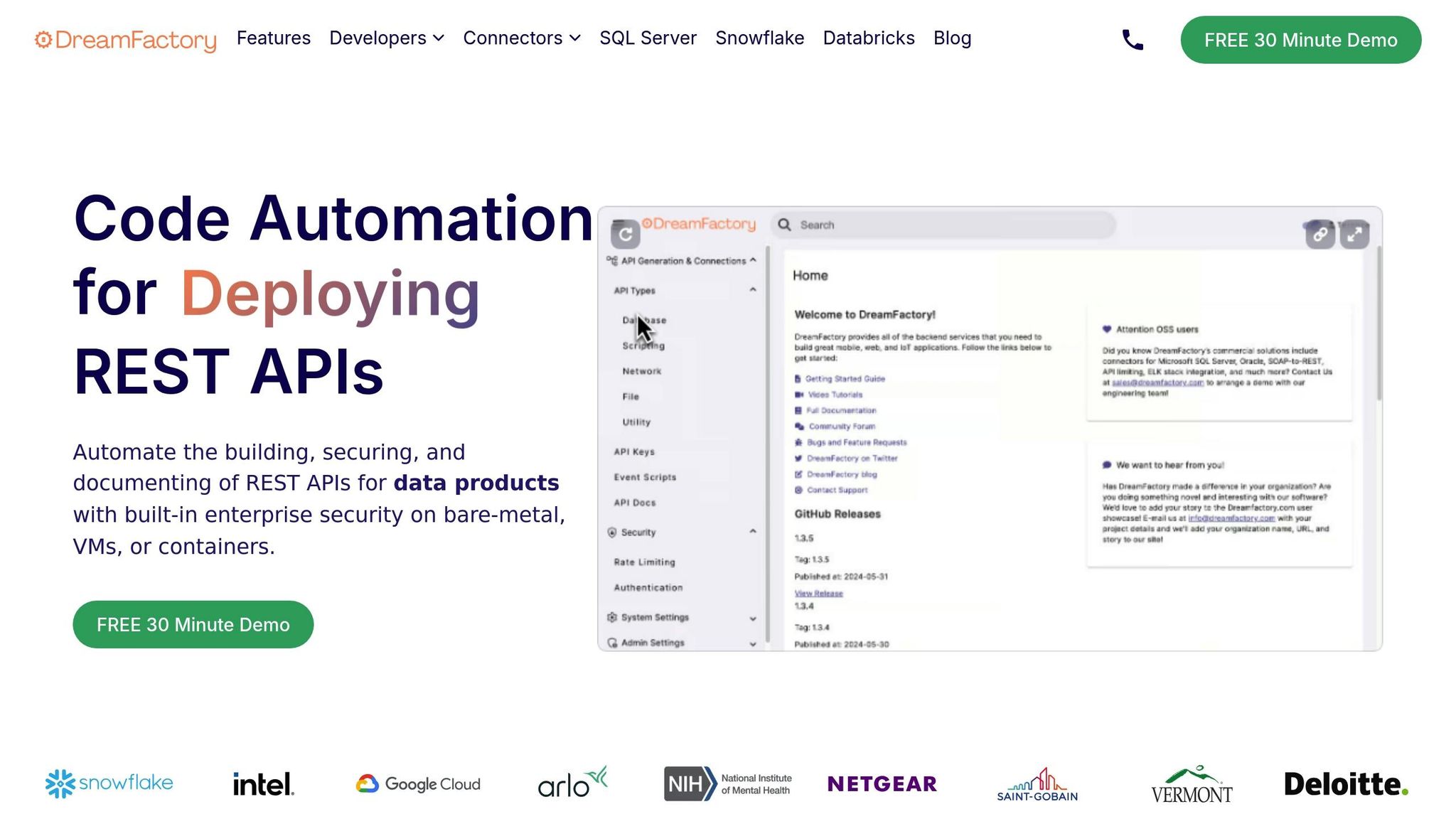
DreamFactory employs token bucket algorithms and manages concurrent requests to ensure consistent performance in distributed environments.
Key features include:
- **Dynamic Token Distribution**: Automatically adjusts token allocation based on system load.
- **Concurrent Request Management**: Limits simultaneous requests to avoid overloading the system.
- **Adaptive Rate Limiting**: Adjusts rate limits dynamically, depending on resource availability and usage patterns.
With server-side scripting, DreamFactory allows for custom rate-limiting logic tailored to specific needs, ensuring performance metrics remain on target.
### Performance Indicators
Tracking these performance indicators helps maintain the balance between protection and performance:
| Indicator | Target Range | Impact |
| --- | --- | --- |
| Request Latency | < 100ms | Affects user experience and API speed |
| Token Processing Time | < 5ms | Measures rate-limiting overhead |
| Request Success Rate | > 99.9% | Reflects system reliability |
| Resource Utilization | 60-80% | Balances efficiency and system headroom |
Regular monitoring of these metrics helps identify bottlenecks early, ensuring service quality remains high. Adjustments based on these indicators keep the system running smoothly and efficiently over time.
## Next-Generation Improvements
After addressing latency and throughput hurdles, these advancements further refine distributed rate limiting systems.
### State Management Options
Distributed systems rely on precise state management to maintain consistency across nodes. For smaller to medium deployments, centralized methods offer steady performance. In contrast, decentralized approaches are better suited for large-scale systems, as they handle higher throughput. Local caching combined with synchronized updates can strike a balance by reducing latency while maintaining throughput. For instance, DreamFactory employs a hybrid approach, blending local caching with distributed synchronization to optimize both performance metrics.
Beyond state management, hardware upgrades can significantly enhance system efficiency.
### Hardware-Based Solutions
Upgrading hardware can improve rate limiting by offloading key tasks to specialized processors and utilizing optimized memory. This allows systems to handle rate limiting operations more efficiently, cutting down on latency. DreamFactory’s platform is specifically designed to benefit from such hardware improvements, especially when operating in containerized environments.
With hardware upgrades in place, dynamic scaling ensures resources are used effectively.
### Smart Scaling Systems
Dynamic scaling plays a key role in modern rate limiting. These systems adjust processing resources in real time based on traffic patterns. Techniques like predictive scaling, load-based distribution, and automatic resource tuning help maintain performance even during traffic spikes. DreamFactory’s adaptive rate limiting uses these methods to guarantee steady API performance, even under heavy loads. Its containerized deployment model ensures quick scaling responses, supporting both low latency and high throughput.
## Conclusion
### Main Points Summary
Balancing latency and throughput requires careful precision. Effective state management is essential, with hybrid solutions - combining local caching and distributed synchronization - showing the best results. Optimizing hardware and scaling intelligently are also key factors. The goal is to strike the right balance between quick response times (latency) and overall system capacity (throughput).
### Implementation Guide
1. **Evaluate System Requirements**: Understand your traffic patterns, peak loads, and latency needs.
2. **Choose Architecture Pattern**: Decide between centralized, decentralized, or hybrid state management based on your system's scale and complexity.
3. **Configure Rate Limits**: Set limits that align with your available resources and business goals.
4. **Monitor Performance**: Keep an eye on metrics like response times and success rates to ensure smooth operations.
5. **Optimize Gradually**: Use real-world performance data to fine-tune your system over time.
These steps align seamlessly with DreamFactory’s approach to API management.
### DreamFactory Rate Limiting Tools
DreamFactory makes implementing distributed rate limiting straightforward with its comprehensive API management platform. Here’s how it helps:
| Feature | Benefit |
| --- | --- |
| Instant API Generation | Get production-ready APIs in just 5 minutes, saving valuable setup time. |
| Built-in Security Controls | Includes RBAC and API key management to ensure secure access. |
| Server-side Scripting | Allows for custom rate limiting logic tailored to your needs. |
| Multiple Deployment Options | Compatible with environments like Kubernetes and Docker. |
> "DreamFactory is far easier to use than our previous API management provider, and significantly less expensive." - Adam Dunn, Sr. Director, Global Identity Development & Engineering, McKesson
## FAQs
### What’s the best way to balance latency and throughput in distributed rate limiting systems?
Balancing **latency** and **throughput** in distributed rate limiting systems requires careful consideration of system goals and constraints. Latency refers to the time it takes to process a request, while throughput measures the number of requests handled over a given period. Optimizing one often impacts the other.
To achieve an effective balance, start by identifying your system's priorities - whether low latency or high throughput is more critical. Techniques like **token bucket algorithms** or **leaky bucket algorithms** can help regulate request flow efficiently. Additionally, leveraging caching mechanisms and reducing inter-node communication in your distributed system can minimize delays while maintaining high throughput.
Platforms like DreamFactory can simplify API management, ensuring secure and efficient data handling, which can further support your efforts to optimize both latency and throughput in distributed systems.
### How can distributed rate limiting systems handle traffic spikes without affecting stability?
To manage traffic spikes effectively in distributed rate limiting systems, you can implement a combination of strategies to maintain both stability and performance. **Dynamic rate adjustment** is one approach, where the system adapts rate limits based on real-time traffic patterns. This ensures critical requests are prioritized during high-load periods.
Another strategy is **token bucket or leaky bucket algorithms**, which allow bursts of traffic while maintaining an overall limit. Additionally, **caching and load distribution** across multiple nodes can help balance the load and reduce latency during peak times. By combining these techniques, you can ensure your system remains stable and responsive even under sudden traffic surges.
### How do hardware and infrastructure impact latency in distributed rate limiting systems?
Hardware and infrastructure play a **critical role** in optimizing latency within distributed rate limiting systems. High-performance servers, efficient network configurations, and low-latency storage solutions can significantly reduce delays in processing requests.
Additionally, deploying rate limiting components closer to end users, such as through **edge computing** or geographically distributed data centers, helps minimize latency caused by long-distance data transmission. Ensuring your infrastructure is well-optimized and scalable is key to balancing both latency and throughput effectively.
## Related Blog Posts
- [5 Ways to Optimize API Performance with DreamFactory](https://blog.dreamfactory.com/blog/5-ways-to-optimize-api-performance-with-dreamfactory/)
- [Rate Limiting in Multi-Tenant APIs: Key Strategies](https://blog.dreamfactory.com/blog/rate-limiting-in-multi-tenant-apis-key-strategies/)
- [5 Tips for Reducing Latency in API Data Transfers](https://blog.dreamfactory.com/blog/5-tips-for-reducing-latency-in-api-data-transfers/)
- [How to Track API Performance Over Time](https://blog.dreamfactory.com/blog/how-to-track-api-performance-over-time/)

Kevin Hood
Kevin Hood is an accomplished solutions engineer specializing in data analytics and AI, enterprise data governance, data integration, and API-led initiatives.
Stay Connected with
The Connector Newsletter!
Subscribe to stay up-to-date with DreamFactory's latest product updates, API best practices, and tech humor in your inbox.
[](https://www.dreamfactory.com/)
[Call Sales +1 (415) 993-5877](tel:+14159935877)
Open – Mon–Fri 9–5 PT
[FREE 30 Minute Demo](https://www.dreamfactory.com/demo)
#### Follow us
- [GitHub](https://github.com/dreamfactorysoftware/dreamfactory)
- [Facebook](https://www.facebook.com/dfsoftwareinc/)
- [X (Twitter)](https://twitter.com/dfsoftwareinc)
- [LinkedIn](https://www.linkedin.com/company/dreamfactory-software)
- [YouTube](https://www.youtube.com/c/dreamfactorysoftware)
### Features
[Features](https://www.dreamfactory.com/features) [Self hosted](https://www.dreamfactory.com/features#self) [API Generation](https://www.dreamfactory.com/features#api) [Security](https://www.dreamfactory.com/features#secure) [Customization](https://www.dreamfactory.com/features#custom) [Pricing](https://www.dreamfactory.com/pricing)
### Installers
[Linux](https://www.dreamfactory.com/features#installer) [Docker](https://www.dreamfactory.com/features#installer) [Kubernetes](https://www.dreamfactory.com/features#installer)
### API Resources
[Documentation](https://docs.dreamfactory.com/) [Case Studies](https://www.dreamfactory.com/stories) [White Papers](https://www.dreamfactory.com/resources/whitepapers) [Academy](https://www.dreamfactory.com/academy) [API Calculator](https://calculator.dreamfactory.com) [Open Source](https://github.com/dreamfactorysoftware)
### Company
[Blog](https://blog.dreamfactory.com/) [Hub](https://www.dreamfactory.com/hub) [About us](https://www.dreamfactory.com/about) [Partners](https://www.dreamfactory.com/partners) [Support](https://www.dreamfactory.com/support) [Connectors](https://www.dreamfactory.com/connectors) [Contact Us](https://www.dreamfactory.com/demo)
© 2025 DreamFactory. All rights reserved.
[Terms of Use](https://www.dreamfactory.com/terms-of-use) [Privacy Policy](https://www.dreamfactory.com/privacy-policy) [LLMs](https://www.dreamfactory.com/llms.txt)
```json
{
"@context" : "https://schema.org",
"@type" : "BlogPosting",
"author" : {
"@type" : "Person",
"name" : "Kevin Hood",
"url" : "https://blog.dreamfactory.com/author/kevin-hoo"
},
"datePublished" : "2025-05-07T04:12:27.000Z",
"headline" : "Latency vs. Throughput in Distributed Rate Limiting",
"image" : [ "https://assets.seobotai.com/cdn-cgi/image/quality=75,w=1536,h=1024/dreamfactory.com/681ab4687a153cb8e4518036-1746591214693.jpg" ],
"mainEntityOfPage" : {
"@id" : "https://blog.dreamfactory.com/latency-vs-throughput-in-distributed-rate-limiting",
"@type" : "WebPage"
},
"publisher" : {
"@type" : "Organization",
"logo" : {
"@type" : "ImageObject",
"url" : "https://blog.dreamfactory.com/hubfs/DreamFactory%20-%20Orange%20-%20Transparent-1.png"
}
}
}
```
```json
{
"@context" : "https://schema.org",
"@type" : "FAQPage",
"mainEntity" : [ {
"@type" : "Question",
"acceptedAnswer" : {
"@type" : "Answer",
"text" : "Balancing latency and throughput in distributed rate limiting systems requires careful consideration of system goals and constraints. Latency refers to the time it takes to process a request, while throughput measures the number of requests handled over a given period. Optimizing one often impacts the other.
To achieve an effective balance, start by identifying your system's priorities - whether low latency or high throughput is more critical. Techniques like token bucket algorithms or leaky bucket algorithms can help regulate request flow efficiently. Additionally, leveraging caching mechanisms and reducing inter-node communication in your distributed system can minimize delays while maintaining high throughput.
Platforms like DreamFactory can simplify API management, ensuring secure and efficient data handling, which can further support your efforts to optimize both latency and throughput in distributed systems.
"
},
"name" : "What’s the best way to balance latency and throughput in distributed rate limiting systems?"
}, {
"@type" : "Question",
"acceptedAnswer" : {
"@type" : "Answer",
"text" : "To manage traffic spikes effectively in distributed rate limiting systems, you can implement a combination of strategies to maintain both stability and performance. Dynamic rate adjustment is one approach, where the system adapts rate limits based on real-time traffic patterns. This ensures critical requests are prioritized during high-load periods.
Another strategy is token bucket or leaky bucket algorithms, which allow bursts of traffic while maintaining an overall limit. Additionally, caching and load distribution across multiple nodes can help balance the load and reduce latency during peak times. By combining these techniques, you can ensure your system remains stable and responsive even under sudden traffic surges.
"
},
"name" : "How can distributed rate limiting systems handle traffic spikes without affecting stability?"
}, {
"@type" : "Question",
"acceptedAnswer" : {
"@type" : "Answer",
"text" : "Hardware and infrastructure play a critical role in optimizing latency within distributed rate limiting systems. High-performance servers, efficient network configurations, and low-latency storage solutions can significantly reduce delays in processing requests.
Additionally, deploying rate limiting components closer to end users, such as through edge computing or geographically distributed data centers, helps minimize latency caused by long-distance data transmission. Ensuring your infrastructure is well-optimized and scalable is key to balancing both latency and throughput effectively.
"
},
"name" : "How do hardware and infrastructure impact latency in distributed rate limiting systems?"
} ]
}
```